


How GI Becomes the Coordinator of Digestive Health
By Dr. Charles Accurso and Praveen Suthrum
At the end of the last chapter, we arrived at a larger question.
If a GI practice strengthens access, improves recalls, protects referral relationships, activates existing assets, and builds the leadership capacity to keep its head out of the boat, what comes next?
Access to what?
More procedures? More office visits? More ancillary revenue? More referrals?
Those matter. But if GI stops there, it misses the deeper opportunity. The next stage of gastroenterology will not be defined only by how many procedures a practice performs. It will be defined by whether the practice can organize digestive health into structured, coordinated pathways that patients, referring physicians, payers, and partners can trust.
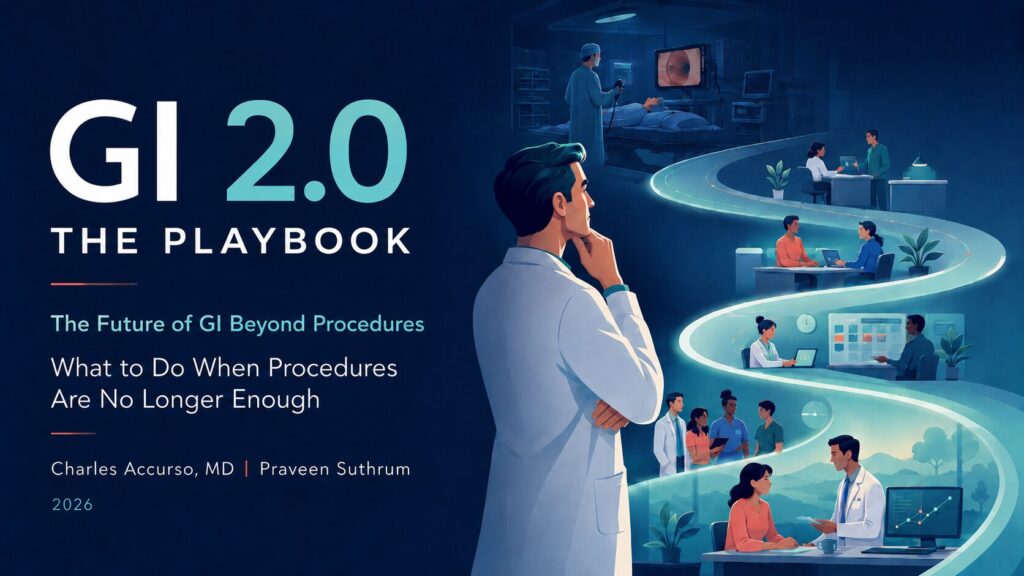
This is the shift from procedures to pathways.
Procedures are events. Digestive diseases are journeys.
A colonoscopy has a beginning and an end. An upper endoscopy has a beginning and an end. A liver disease evaluation, an IBS journey, a Barrett’s surveillance program, an IBD management plan, a fatty liver pathway, or a colon cancer prevention program does not. These conditions unfold over time. They require risk stratification, education, monitoring, follow-up, escalation, reassurance, medication management, partner support, and sometimes procedures.
GI has already built parts of this model. IBD is the clearest example. A patient with Crohn’s disease or ulcerative colitis is not usually treated as a one-time episode. The patient enters a longitudinal care model. There are visits, labs, imaging, colonoscopies, biologics, infusion, specialty pharmacy coordination, prior authorizations, symptom flares, surveillance, medication decisions, and ongoing monitoring. GI understands that these patients require continuity.
The question now is whether GI can apply that same pathway thinking to other areas of digestive health.
Not every condition needs the same level of GI involvement. Not every patient should remain in GI indefinitely. Not every service needs to be built inside the practice. But the practice must become more intentional about deciding what it owns, what it coordinates, what it partners around, and what it sends back.
That is the work of GI 2.0.
The Coordinator of Digestive Health
When we say GI should become the coordinator of digestive health, we do not mean that GI should swallow every adjacent service or compete with every referring physician. That would be a mistake.
Primary care physicians still play a central role. Many stable, low-complexity patients should be returned to primary care. Some services are better delivered by partners. Some emerging areas are not yet ready for full clinical adoption. Some opportunities sound exciting but lack evidence, reimbursement, operational feasibility, or all three.
Coordination is not ownership of everything.
Coordination means the GI practice becomes the trusted organizer of the digestive-health journey. It knows which patients need specialist evaluation. It knows which patients need surveillance. It knows which patients need nutrition support, behavioral support, metabolic care, clinical trials, surgery, oncology, or monitoring. It knows which partners are credible. It knows when to keep the patient, when to share care, and when to refer back.
Think of the traditional family physician. In earlier models of care, the family doctor often knew the patient, the family, the history, the context, and the community. The primary care physician did not personally perform every service, but coordinated the patient’s movement through the healthcare system.
GI now has the opportunity to play a similar role for digestive health.
The digestive system is not a narrow organ system. It extends from the mouth to the anus. It is connected to metabolism, immunity, nutrition, cancer prevention, inflammation, brain-gut signaling, microbiome science, obesity, liver disease, and increasingly, patient-facing technologies. Yet much of GI practice remains organized around discrete visits and procedures.
That gap is the opportunity.
The future GI practice will not simply ask, “What procedures do we perform?” It will ask, “What digestive-health pathways do we coordinate?”
The Referring Physician Is Also the Customer
There is another customer in this model who is easy to underemphasize: the referring physician.
GI practices often think about growth from their own perspective. How do we improve access? How do we build pathways? How do we create revenue? How do we keep patients?
Those questions matter, but they are incomplete.
The better question is also: What does the primary care physician need from us?
The answer is not complicated, but it is often poorly executed. Primary care physicians want access. They want confidence that their patients will be seen when needed. They want communication when something important is found. They want to know that patients are not being over-managed, lost, or routed into confusing care pathways. They want specialists who solve problems without creating new ones.
This becomes especially important when a significant diagnosis is made.
A note sent through the EHR is not always communication. A faxed consult note is not always communication. A signed encounter is not always communication.
If a patient is diagnosed with colon cancer, Crohn’s disease, advanced liver disease, a concerning mass, or another life-changing condition, the referring physician should not first learn about it when the patient returns and says, “The gastroenterologist told me I have cancer.”
Communication does not end when the specialist signs the note.
For routine findings, the standard note may be sufficient. For major diagnoses, GI needs a better communication pathway. That may mean a phone call, a secure message, an AI-assisted summary routed to the right person, or a structured alert. The method can vary. The principle should not.
The referring physician should be part of the solution, not surprised by it.
This is not merely courtesy. It is relationship infrastructure. The primary care physician trusted the GI practice with the patient. The GI practice should close the loop.
What a Pathway Really Means
A pathway is not just a disease category.
It is not enough to say, “We have a fatty liver pathway,” “We have an IBS pathway,” or “We have a Barrett’s pathway.”
A real pathway has four parts.
First, it has clinical logic. Which patients belong in the pathway? What evaluation is appropriate? Who is low risk, intermediate risk, or high risk? When should the patient return to primary care? When should the patient stay with GI? When should the patient be escalated?
Second, it has an operating model. Who does what? What does the physician do? What does the APP do? What does the nurse, navigator, scheduler, billing team, or partner do? What happens when the patient misses a visit? What happens when a lab is abnormal? What happens when the patient does not respond?
Third, it has an economic model. What is reimbursed? What is unpaid work? What creates downstream value? What creates staff burden? What must be automated, delegated, partnered, or avoided?
Fourth, it has a communication loop. What goes back to the patient? What goes back to the referring physician? What goes into the chart? What comes back from the partner? What happens after a major diagnosis?
A pathway without clinical logic is vague.
A pathway without an operating model is an idea.
A pathway without an economic model becomes unpaid work.
A pathway without communication becomes fragmentation.
Own, Coordinate, Partner, Refer Back
The central framework is simple.
For every pathway, a GI practice should ask four questions.
What should we own?
What should we coordinate?
What should we partner around?
What should we refer back?
This framework protects the practice from two opposite mistakes.
The first mistake is underreach: staying too narrow, focusing almost entirely on procedures, and allowing other companies, platforms, employers, payers, and digital health models to define the broader digestive-health journey.
The second mistake is overreach: trying to own everything, hire everyone, manage every condition longitudinally, and accidentally overwhelm the practice while damaging referral relationships.
Neither extreme works.
GI should clearly own certain areas: colon cancer prevention, IBD management, advanced endoscopy, Barrett’s surveillance, complicated GERD, liver-risk evaluation, certain motility evaluations, procedure-linked diagnosis and follow-up, and many anorectal issues that are often under-addressed in GI training and practice.
GI should coordinate other areas: metabolic digestive health, fatty liver care, post-diagnosis navigation, chronic constipation, gut-brain disorders, complex reflux workups, and the broader journey after certain diagnoses are made.
GI should partner around services that are necessary but not always efficient to build internally: nutrition, behavioral health, digital therapeutics, gut-directed psychology, microbiome-related services when evidence supports them, clinical trials, remote monitoring, weight-management support, and virtual GI programs.
GI should refer back stable, low-complexity patients whose ongoing care can be safely managed by primary care. A patient whose reflux is controlled on a standard medication regimen does not necessarily need to remain in GI just so the prescription can be refilled. A patient with low-risk findings and clear primary care follow-up may not need repeated specialist visits. Referral relationships are strengthened when GI uses judgment and does not unnecessarily hold onto patients.
The mistake is assuming every new GI pathway must be built inside the practice. Some should be owned. Some should be coordinated. Some should be partner-enabled. Some should be referred back.
That is the operating principle of Chapter 4.
The Practice Does Not Need to Own Every Asset
There is a useful way to think about this outside medicine.
Airbnb does not own the homes on its platform. Uber does not own the cars. Their value comes from coordination, trust, standards, access, and experience.
A GI practice is not Airbnb or Uber. Medicine is different. Clinical responsibility cannot be reduced to a marketplace analogy. But the strategic lesson is useful: the practice does not need to own every service in order to coordinate the patient journey.
A GI practice may not employ the best celiac dietitian. But it should know who that dietitian is.
It may not employ a gut-directed behavioral therapist. But it should know which program has evidence, communicates well, and treats patients responsibly.
It may not build a virtual GI platform. But it should know when virtual support could help a patient.
It may not own a microbiome company, nutrition platform, clinical trial network, or remote-monitoring solution. But it should know which of these are credible enough to integrate into care.
A diagnosis should not end with, “Go find someone.”
If a patient is diagnosed with celiac disease, it may not be enough to say, “Avoid gluten and see a dietitian.” Celiac disease may not be a major economic pathway for most practices, but it is a simple example of what coordination means. The practice should know which dietitians understand celiac disease, which participate in common insurance plans, how the referral is made, what should come back to GI, and what the PCP should monitor over time.
Coordination requires a trusted map.
That map may include nutritionists, behavioral health providers, surgeons, oncologists, obesity medicine specialists, endocrinologists, clinical trial partners, digital therapeutics, remote-monitoring platforms, virtual GI companies, and community resources.
The practice does not need to build the whole ecosystem.
But it should stop leaving patients to navigate the ecosystem alone.
Five Practical Pathways, Five Strategic Lessons
There are many possible digestive-health pathways. Microbiome, nutrition, gut-brain care, liquid biopsy, stool-based testing, obesity-related digestive disease, constipation, motility, celiac disease, anorectal care, and virtual care all belong in the larger conversation.
But if a private GI practice is deciding where to begin, five pathways stand out.
Colon cancer screening and surveillance.
Fatty liver and metabolic GI.
IBS and gut-brain disorders.
GERD, Barrett’s, and dyspepsia.
IBD.
These are not equal. They do different strategic jobs.
Colon cancer screening and surveillance protect the core procedural foundation of GI. Fatty liver and metabolic GI may be the next major high-volume chronic pathway. IBS and gut-brain disorders represent a high-volume, poorly served, partner-enabled pathway. GERD and Barrett’s represent a high-volume pathway that requires careful segmentation. IBD is the mature longitudinal model GI already understands.
Together, these five pathways show how GI can evolve without abandoning what already works.
Colon Cancer Screening and Surveillance: Protecting the Core
Any discussion of new GI pathways must not forget the core pathway that built much of modern GI economics: colon cancer screening and surveillance.
Colon cancer prevention remains one of the most important things gastroenterologists do. It is clinically meaningful, economically central, and deeply connected to recall systems, access, procedure capacity, pathology, patient education, and primary care referral relationships.
But even this pathway is changing.
Non-invasive screening options, stool-based tests, blood-based tests, changing guidelines, patient preference, payer pressures, health system initiatives, and public awareness are reshaping how patients enter the colon cancer prevention pathway. GI may not always control the front door. Primary care, diagnostics companies, payers, employers, and patients themselves may increasingly shape the first step.
That does not make GI less important. It makes GI’s role more strategic.
GI must own the full surveillance and diagnostic completion pathway. A positive non-invasive test still needs appropriate follow-up. Patients with polyps need surveillance. Patients with family history need guidance. Patients who miss recall need outreach. Patients who are afraid need education. Patients who assume a negative test means they never need GI again may need clarification.
Colon cancer prevention is not just a procedure pathway. It is a population-health pathway.
It includes risk identification, screening choice, patient education, follow-up after abnormal tests, colonoscopy, pathology, surveillance intervals, recall activation, and long-term continuity.
This is also where collaboration with primary care becomes essential. A strong colon cancer pathway should not be designed by GI alone, nor by diagnostics companies alone, nor by primary care alone. The best model brings them together around the patient.
A regional colorectal cancer intelligence and navigation model could include several practical components.
First, patient recovery and re-engagement: identifying patients who fell out of the screening or surveillance pathway and using outreach to bring them back into care.
Second, screening pathway optimization: helping primary care physicians match patients to the screening or prevention option they are most likely to complete, while ensuring that abnormal results reliably move into diagnostic completion.
Third, high-risk patient prioritization: combining GI and primary care data to find overdue patients at elevated risk and prioritize them for follow-up.
Fourth, physician-designated routing protocols: creating trusted referral and screening rules co-authored by GI and primary care, so patients are routed based on clinical need rather than confusion, habit, or marketing.
Fifth, continuum tracking: building dashboards or workflows that follow patients from screening eligibility through diagnosis and treatment, flagging each point where they may fall through the cracks.
This does not require every practice to build a massive new platform. It requires GI to think beyond the procedure and take responsibility for the pathway around the procedure.
Even bowel prep belongs in this pathway mindset. A colonoscopy is not successful simply because it is scheduled. The patient must understand the prep, complete it correctly, arrive on time, and be adequately prepared for the exam. AI-supported prep calls, automated reminders, patient education, and readiness checks are not minor operational conveniences. They protect procedure quality, reduce cancellations, and prevent wasted capacity.
Over time, this could become more sophisticated. Practices may use patient-reported data, images, or other signals to identify inadequate prep before the patient arrives, allowing intervention before a case is lost. The larger point is not any one tool. The point is that colonoscopy quality begins before the patient reaches the procedure room.
If Chapter 3 taught us that the recall system is the practice remembering the patient, colon cancer surveillance may be the clearest example of why that memory matters.
Protecting the procedural foundation of GI does not mean clinging to the past. It means redesigning the pathway around how patients now enter, move through, and return to the system.
Fatty Liver: The Emerging Chronic Pathway
If a GI practice could build only one new structured digestive-health pathway in the next twelve months, fatty liver may be the strongest candidate.
The reason is simple: volume.
Fatty liver is common, growing, clinically important, and deeply connected to obesity, diabetes, metabolic syndrome, cardiovascular risk, and the broader health of the patient. For years, GI practices have evaluated patients with elevated liver enzymes, abnormal imaging, or suspected fatty liver. This referral pattern is not new.
What is new is the possibility of turning a once-passive diagnosis into an active, monitored, treatable pathway.
Historically, many patients were told some version of: “You have fatty liver. Lose weight. We’ll keep an eye on it.” For some patients, that may have been reasonable given the limits of treatment options at the time. But the landscape is changing. Better fibrosis assessment tools, metabolic therapies, GLP-1 medications, clinical trials, greater patient awareness, and the rise of obesity-related care have changed what fatty liver can mean inside a GI practice.
The pathway is not new. The chronic-care opportunity is new.
A typical patient may come to GI because of elevated liver enzymes, an ultrasound showing fatty liver, obesity with metabolic risk, diabetes, or a primary care referral. The gastroenterologist’s first job is not simply to confirm what everyone already suspects. The first job is to evaluate properly. Other causes of liver disease must be considered and ruled out where appropriate: viral, autoimmune, iron overload, alcohol-related, medication-related, and other liver conditions. The physician must assess risk, determine whether fibrosis assessment is needed, decide whether biopsy is appropriate, and communicate what the diagnosis means.
This is core GI work.
The pathway then becomes more interesting. Once the diagnosis is made and risk is staged, not every patient should be managed the same way. Some low-risk patients may be referred back to primary care with clear guidance and periodic monitoring. Intermediate-risk patients may follow with an APP under protocol. Higher-risk patients may need physician follow-up, repeat fibrosis assessment, biopsy consideration, medication strategy, clinical trial evaluation, or hepatology referral when another liver condition is suspected or the case exceeds the practice’s comfort.
The important shift is that these patients can become long-term patients of the practice. Not all of them, and not at the same intensity, but enough to justify a pathway.
A patient may be monitored every six months, annually, or every few years depending on risk. A FibroScan or other fibrosis-assessment tool may become part of the practice’s long-term monitoring infrastructure. Some practices may own the equipment. Others may bring it in periodically or partner around it. The reimbursement for such testing may not be dramatic, but the strategic value is that it keeps the patient journey coordinated inside the GI pathway.
The business model already exists in part. Consults, follow-ups, liver workup, FibroScan or other testing, ultrasound when performed or arranged, selected biopsy, treatment initiation, and treatment monitoring are reimbursable in many traditional ways. The problem is not that none of the pathway is paid. The problem is that some of the most important supporting work may not be.
Nutrition coordination may not be paid to the GI practice. Lifestyle support may not be paid. Exercise coaching is not paid. Patient education beyond the visit is often not paid. Coordination with obesity medicine, endocrinology, nutrition, or digital metabolic programs may not be paid unless there is a clear model. GLP-1 prior authorization can become a major administrative burden. Staff may spend time calling payers, submitting documentation, appealing denials, and educating patients, without the practice being compensated for that work.
This is where Chapter 2 comes back. A fatty liver pathway will not scale if the practice simply adds more unpaid work to an already strained staff. Prior authorization automation, patient education templates, APP protocols, partner workflows, and clear rules for who manages GLP-1s become essential.
The goal is not for every GI practice to become a GLP-1 prescribing center. Some primary care physicians are already managing obesity and metabolic disease well. Some endocrinologists or obesity medicine specialists may be better positioned to manage medication-heavy pathways. But GI should understand where GLP-1s, lifestyle intervention, nutrition, fibrosis monitoring, trials, and metabolic support fit into liver-risk care.
Fatty liver is not just a diagnosis. It is a test of whether GI can coordinate metabolic digestive care without trying to own every part of metabolic medicine.
A minimum viable fatty liver pathway could be launched in ninety days. The practice would define entry criteria, adopt society-guided risk stratification, determine how fibrosis will be assessed, segment patients into risk groups, define follow-up rules, assign APP responsibilities, identify nutrition or metabolic partners, decide how GLP-1 prior authorization will be handled, and track a few key measures: patient volume, follow-up conversion, FibroScan utilization, staff burden, and patient outcomes.
The limiting factor is not clinical relevance.
The limiting factor is operational design.
IBS and Gut-Brain Disorders: The Pathway GI Cannot Build Alone
If fatty liver is the strongest medically grounded chronic pathway, IBS and gut-brain disorders may be the clearest example of why GI needs partners.
IBS is one of the most common diagnoses in gastroenterology. From a volume perspective, it is enormous. From a patient frustration perspective, it is even larger. These patients often arrive after months or years of symptoms, incomplete explanations, dietary experimentation, anxiety, embarrassment, or repeated visits across healthcare settings.
Traditional GI often does the right initial work. The gastroenterologist rules out red flags, considers appropriate labs, imaging, endoscopy, or colonoscopy when indicated, and makes the diagnosis. The physician explains that the patient has IBS or a disorder of gut-brain interaction. Medications may be prescribed. Dietary advice may be given. The patient may be reassured that nothing dangerous has been found.
Then what?
In too many practices, the pathway weakens after diagnosis.
The patient is not necessarily cured. The symptoms may continue. The patient may need nutrition support, gut-directed behavioral therapy, medication adjustments, education, reassurance, symptom tracking, stress-related support, or longitudinal coaching. Many patients need more than a handout and a follow-up appointment. Yet most GI practices are not built to provide this full support internally.
That is why IBS is not simply a clinical challenge. It is an operating-model challenge.
A GI practice could hire dietitians, therapists, behavioral health professionals, health coaches, and digital support teams. A large platform might do that. An academic center might build such a program. But most private practices will not build a full in-house gut-brain and nutrition department.
They do not have the scale, space, reimbursement structure, or management capacity.
So the minimum viable IBS pathway must be partner-enabled.
The gastroenterologist should own the initial evaluation. The physician rules out red flags, performs appropriate workup, confirms the diagnosis, and explains it in a way that validates the patient’s experience. IBS should not be presented as “nothing is wrong.” It should be presented as a real disorder involving gut sensitivity, motility, diet, stress physiology, the nervous system, and patient experience.
After the diagnosis is made, the practice can create structured follow-up. A well-trained APP can manage many subsequent visits: symptom review, medication follow-up, dietary adherence, red-flag escalation, patient education, and coordination with outside services. The APP should not be an overflow bucket. The APP should be part of a designed pathway.
The practice then partners around what it cannot efficiently provide: nutrition, gut-directed CBT, hypnotherapy, digital therapeutics, behavioral support, symptom tracking, virtual GI programs, or patient coaching. The right partner depends on the market, evidence, patient preference, insurance coverage, and economics.
The economics are the hard part.
If the GI practice refers a patient to an outside IBS or gut-brain program, who pays? Does the partner bill the patient, employer, payer, or practice? Is there a legally compliant revenue-sharing arrangement? Does the partner communicate back to the GI practice? Who reviews the data? Is the physician expected to review reports without a reimbursed visit? Does the APP handle it? Is the information summarized only when the patient returns for follow-up?
These questions cannot be ignored.
The economics must follow the process, otherwise the process breaks down sooner or later.
There is another layer of complexity. The primary care physician cannot be forgotten. Many PCPs already manage anxiety, depression, stress-related symptoms, and psychosocial issues. They may not want every patient routed to an outside digital or behavioral program without discussion. They may be operating in payment models where referrals and total cost of care matter. GI must be sensitive to this.
This is where the referral relationship reverses. When a PCP refers to GI, the PCP wants to know: Will this specialist take good care of my patient? Will they communicate back? Will they do the right thing? Will the patient return satisfied?
When GI refers to a partner-enabled pathway, GI now has the same responsibility. The practice must know whether the partner takes good care of patients, communicates clearly, strengthens the relationship, and avoids unnecessary cost.
At the same time, GI cannot ignore patient behavior. If GI does not offer a pathway, patients may bypass both the PCP and the gastroenterologist and go directly to virtual GI companies, gut-health apps, supplement companies, online communities, or digital care platforms. Many of these companies are forming around the very needs that traditional GI has not fully met.
The strategic question is not whether patients want this support.
They already do.
The question is whether GI will help coordinate it responsibly.
IBS is not a failure of GI care. It is a failure of the traditional GI operating model to support a condition that lives between physiology, behavior, diet, stress, and longitudinal patient experience.
Fatty liver tests whether GI can turn diagnosis into monitoring.
IBS tests whether GI can turn diagnosis into support.
GERD and Barrett’s: The Pathway That Requires Discipline
GERD is high volume, familiar, and economically meaningful. It is also one of the clearest examples of why pathway design requires discipline.
By the time many GERD patients present to GI, they have already tried over-the-counter therapy or been treated by a referring physician. They may have taken PPIs for weeks or months. Often, they arrive with an expectation that they will have an upper endoscopy. Whether that is always clinically necessary is a separate question. In the real world, patient expectations, referring physician expectations, age, symptoms, risk factors, medical-legal concerns, and diagnostic uncertainty often shape what happens.
The GERD pathway is not one pathway.
It is a sorting problem.
Some patients have uncomplicated reflux that responds to therapy. After evaluation and appropriate recommendations, these patients may return to primary care. GI does not need to own every PPI refill. Holding stable reflux patients indefinitely can crowd the schedule, compete with primary care, and reduce access for patients who truly need specialist input.
Other patients need endoscopic evaluation. They may have persistent symptoms, dysphagia, bleeding, weight loss, age-related risk factors, refractory symptoms, or uncertainty about the diagnosis. For these patients, endoscopy is not merely a procedure; it is part of a pathway that may include biopsy, pathology, follow-up, treatment adjustment, and risk stratification.
Some patients enter Barrett’s surveillance. Once Barrett’s esophagus is identified, the patient belongs in a clear GI-owned longitudinal pathway. Surveillance intervals should follow appropriate guidance and physician judgment, but the broader point is that this is no longer a routine reflux patient. This is a cancer-prevention pathway.
Other patients have symptoms that look like reflux but may not be straightforward reflux. They may have dyspepsia, functional heartburn, reflux hypersensitivity, non-cardiac chest pain, motility disease, or other disorders. These patients may need pH studies, impedance testing, motility studies, or evaluation for non-GI causes. In some cases, gut-brain care or behavioral support becomes relevant.
A smaller group may require advanced reflux evaluation or procedural options. These patients may need coordination with surgeons or advanced endoscopists. The GI practice may not perform every intervention, but it can coordinate objective testing, patient selection, risk discussion, and referral.
The business model in GERD is clearer than in IBS. It includes consults, follow-ups, upper endoscopy, pathology, Barrett’s surveillance, pH studies, motility studies, and coordination around advanced interventions. Most GI practices already do much of this.
The danger is overuse.
The economic opportunity in GERD is not to hold onto every reflux patient. It is to route each patient into the right lane: reassurance and return to PCP, endoscopic evaluation, Barrett’s surveillance, physiologic testing, advanced intervention, or partner-supported care where appropriate.
GERD teaches a different lesson from fatty liver and IBS.
Fatty liver says: build longitudinal monitoring.
IBS says: partner around support.
GERD says: segment carefully.
IBD: The Proof That GI Can Manage Longitudinal Care
IBD is not a new pathway to build. It is the proof that GI already knows how to manage longitudinal disease when the stakes are high enough.
Patients with Crohn’s disease and ulcerative colitis are often among the sickest patients in a GI practice, apart from patients diagnosed with cancer. They are often young. Their disease can be unpredictable. They may require close monitoring, repeated visits, complex medication decisions, labs, imaging, endoscopy, infusion, prior authorization, specialty pharmacy coordination, vaccination review, cancer surveillance, and urgent access during flares.
GI has accepted that these patients need continuity. Stable patients may be seen several times a year. Unstable patients need more frequent contact. When they call with concerning symptoms, they often need to be fit into the schedule. The disease demands an operating model that is more intense than episodic care.
IBD also shows what GI has done right.
GI built infrastructure around therapy. Infusion centers, biologic pathways, medication monitoring, prior authorization workflows, lab tracking, and surveillance colonoscopy became part of the model. Practices learned that chronic GI disease requires systems, not just individual physician memory.
But IBD also reveals where longitudinal care still breaks down.
Patients can disappear. Outreach can fail. Labs can be missed. Symptoms can change between visits. Home monitoring may not flow back into the chart. Physicians may not be paid for reviewing incoming data outside a visit. New therapeutics emerge quickly, making it difficult for every physician to stay current at all times. Prior authorization and insurance rules create friction. The care team can become overwhelmed.
This is where AI and automation may become helpful, but Chapter 4 should not turn IBD into an AI chapter. The point is simpler.
In IBD, technology can become the practice’s memory layer. It can remind patients about labs, check in between visits, flag missed infusions, gather patient-reported outcomes, alert the care team when symptoms change, and help summarize relevant information before the visit. It can also help physicians refresh their understanding of emerging therapies, guidelines, and treatment options.
The goal is not to automate IBD care.
The goal is to reduce the chance that a high-risk chronic patient quietly falls out of view.
IBD shows that GI can build chronic care infrastructure when the disease demands it. The question now is whether GI can apply that same pathway thinking to conditions that are higher volume, less acute, and often less well organized.
The GI 2.0 Pathway Decision Matrix
A GI practice should not choose a pathway because it sounds innovative. It should choose a pathway because it fits the practice’s economics, capabilities, referral environment, competitive landscape, patient demand, and long-term strategy.
The right pathway for one practice may be wrong for another.
A solo gastroenterologist may need a simple, reimbursable, low-overhead pathway. A small group may focus on access, recalls, GERD, and fatty liver. A mid-sized group may use APPs to support longitudinal follow-up. A large independent group may build partnerships around nutrition, behavioral health, clinical trials, digital care, and remote monitoring. A private equity-backed platform may prioritize scalable pathways that can be replicated across markets. A hospital-aligned practice may choose pathways that reduce leakage and coordinate better with system partners. An academic center may focus more heavily on complexity, research, and subspecialty care.
There is no universal “best” pathway. There is only the best pathway for your practice, in your market, with your assets, constraints, and strategy.
The decision should consider both near-term income and long-term strategic value.
In private practice, income matters. It reinforces physician behavior. A pathway that meaningfully improves practice economics is more likely to maintain physician interest and operational commitment.
But not all income shows up immediately. GI often has a long tail. A pathway may create future surveillance, downstream procedures, repeat monitoring, research opportunities, data value, referral defensibility, patient loyalty, or competitive differentiation. A pathway that seems modest in the first ninety days may become valuable over years.
The best pathway is not always the one that produces the fastest revenue. It is the one that combines near-term economics with long-term strategic value.
A practice should evaluate each pathway across several dimensions:
| Decision Factor | Why It Matters |
| Immediate income potential | Does this pathway generate consults, follow-ups, procedures, diagnostics, ancillaries, or reimbursed services now? |
| Lifetime value | Does it create long-term patient relationships, surveillance, monitoring, or future procedures? |
| Patient volume | Is there enough demand to justify operational investment? |
| Clinical fit | Is this native to GI, or is the practice stretching too far? |
| Operational feasibility | Can the practice run this with its current physicians, APPs, staff, systems, and access capacity? |
| APP scalability | Can follow-up and monitoring be delegated safely? |
| Partner availability | Are strong partners available for nutrition, behavioral health, digital care, trials, remote monitoring, or metabolic support? |
| PCP relationship risk | Does this pathway strengthen or threaten referral relationships? |
| Local competition | Does a hospital, competing group, virtual company, or health system already own this space? |
| Strategic moat | Would building this pathway make the practice harder to replace? |
| Technology leverage | Can AI, automation, remote monitoring, or digital tools reduce staff burden? |
| 90-day pilotability | Can the practice test this without massive investment? |
Then the practice decides what role it should play.
Own.
Coordinate.
Partner.
Refer back.
Watch and wait.
This matrix is not meant to create a perfect answer. It is meant to create a serious conversation.
The 90-Day Pathway Pilot
The biggest mistake would be to try to build five pathways at once.
Do not do that.
Pick one.
A ninety-day pathway pilot should be narrow enough to execute, but important enough to matter. It should have a physician champion, an APP or operational lead where appropriate, an administrator, and a simple set of metrics.
The practice should begin by choosing one pathway: fatty liver, IBS, GERD/Barrett’s, IBD optimization, colon cancer surveillance, or another pathway that fits its market. Then it should define the patient population, map the current workflow, identify leakage points, decide what the practice owns, determine what it needs to coordinate or partner around, clarify what should return to primary care, and build a minimal operating model.
The pilot does not need to be perfect.
For colon cancer surveillance, the pilot may focus on overdue recalls and positive non-invasive test completion. For fatty liver, the pilot may focus on patients referred for elevated liver enzymes and abnormal imaging. For IBS, it may focus on a structured diagnosis visit, APP follow-up, and one trusted nutrition or gut-brain partner. For GERD, it may focus on routing patients into stable GERD, Barrett’s surveillance, refractory symptoms, or advanced evaluation lanes. For IBD, it may focus on reducing patients lost to follow-up.
Each pilot should answer four practical questions.
Who is the patient?
What is the pathway?
Who owns each step?
How does the practice get paid?
The first ninety days should produce learning, not perfection. The practice should measure volume, revenue, staff burden, patient satisfaction, referral response, follow-up completion, and operational friction. Then it should decide whether to expand, modify, partner, or stop.
A pathway without an economic model becomes unpaid work.
A pathway without operational ownership becomes an idea.
A pathway without measurement becomes a story.
The Resource Layer
The chapter should not become a vendor directory. That would make it stale quickly.
But practices do need to know what is available.
A useful companion to this book may be a living resource layer: a website, spreadsheet, or GPT-style tool that helps practices explore companies and partners by category. Nutrition. Gut-brain digital therapeutics. Virtual GI. Remote monitoring. Clinical trials. Microbiome. AI prior authorization. Recall automation. Prep support. CRC navigation. Data platforms.
The purpose would not be to endorse every company. The purpose would be to help GI leaders ask better questions.
Who serves this pathway?
What evidence do they have?
How do they communicate back?
How do they get paid?
Do they strengthen or weaken the GI-patient relationship?
Can they work with primary care?
Can they integrate with the practice workflow?
Can they be tested in ninety days?
The future will keep changing. The framework should remain stable, but the partner landscape will evolve. That is why the decision matrix matters more than any single vendor list.
The Real Strategic Shift
The future of GI is not simply more procedures, fewer procedures, or different procedures.
It is a broader reorganization of digestive health.
Procedures will remain central. Colonoscopy, upper endoscopy, advanced endoscopy, surveillance, tissue diagnosis, therapeutics, and procedural expertise are not going away. But procedures alone will not define the most resilient GI practices.
The stronger model is procedures inside pathways.
A colonoscopy inside a colon cancer prevention pathway.
An EGD inside a GERD or Barrett’s pathway.
A FibroScan inside a fatty liver pathway.
A biologic infusion inside an IBD pathway.
A nutrition referral inside an IBS or celiac pathway.
A digital therapeutic inside a gut-brain pathway.
A clinical trial inside a metabolic or inflammatory disease pathway.
An AI outreach agent inside a recall or surveillance pathway.
A significant diagnosis inside a communication pathway that closes the loop with primary care.
This is how GI becomes more than a procedure specialty without abandoning procedures.
It becomes the coordinator of digestive health.
That does not mean doing everything. It means knowing what matters, who should do it, and how the patient moves through the system without getting lost.
The practices that learn this will be harder to replace. They will be more valuable to patients, more useful to referring physicians, more relevant to payers, more attractive to partners, and more prepared for the next wave of diagnostics, AI, virtual care, microbiome science, and metabolic medicine.
GI 2.0 is not about doing fewer procedures.
It is about building the care pathways around them.
And that begins with one practical decision: choose the first pathway, design it carefully, and prove that the practice can move from episodic care to coordinated digestive health.
2 Comments
Pingback: GI 2.0: The Playbook | Chapter 6 | Turning Innovation Into Revenue Streams - Scope Forward
Pingback: GI 2.0: The Playbook | Chapter 8 | The AI-Native GI Practice - Scope Forward