


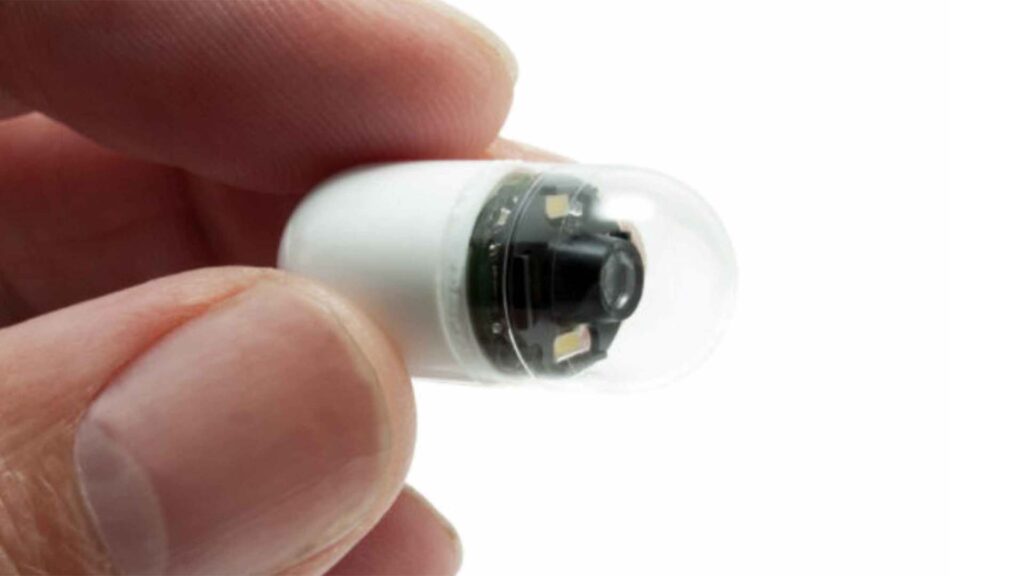
Researchers at East China University of Science and Technology have developed a swallowable, biosensor-based capsule that can detect intestinal bleeding in animal models within minutes. In mice with colitis, the pill-sized microspheres safely passed through the gut, were recovered from stool, and produced light-based signals that tracked with disease severity.
The appeal is obvious: colonoscopy avoidance remains a major barrier to screening and monitoring, especially in chronic conditions like IBD. This technology is positioned not as a replacement for scopes, but as a potential early signal — a way to identify who may need invasive evaluation sooner, and who might safely wait.
Crucially, this work is still preclinical. The researchers are explicit that human testing has not yet begun and would start with safety studies in healthy volunteers, followed by careful comparisons against standard diagnostics in patients. Questions around engineered bacteria, signal interpretation, and reliable recovery will all need answers before clinical use.
Still, the direction is hard to ignore. If validated in humans, swallowable biosensors could become a new layer in GI care — sitting between symptom reporting and endoscopy, rather than replacing either.
👉 Read the full article to see how animal data, cautious human plans, and bold diagnostic ideas are converging in next-gen GI monitoring.