


What’s new?
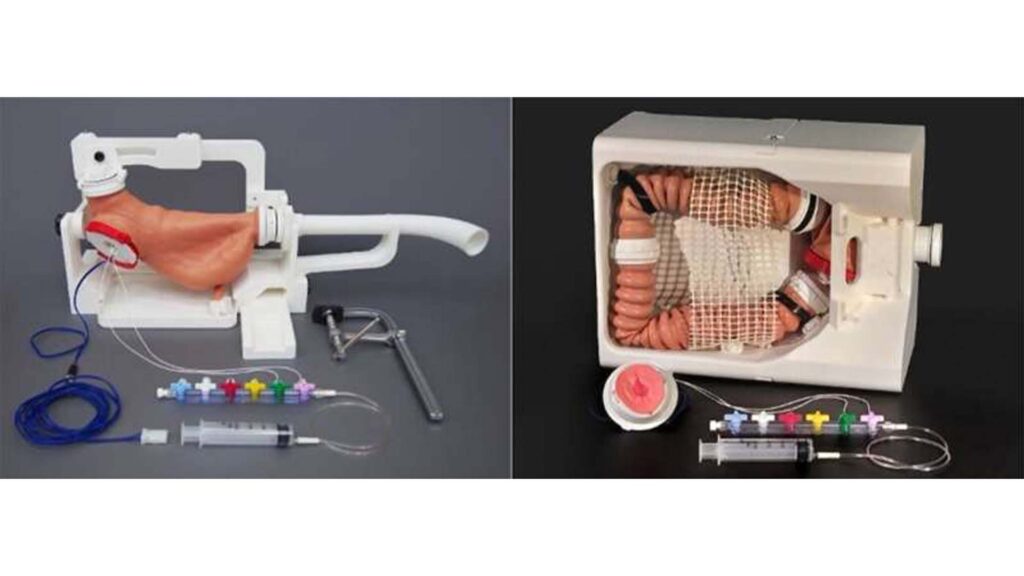
A research team at Tohoku University (Japan) has developed a high-fidelity endoscopic submucosal dissection (ESD) simulator that closely mimics real human tissue — including mucosa, submucosa, and muscle layers — with realistic tactile feedback, bleeding, and complication simulation such as perforations.
How the simulator works:
- Uses a multilayered artificial “ESD sheet” that feels and behaves like human GI tissue.
- Includes simulated blood vessels and realistic bleeding during dissection.
- Allows trainees to experience complications (e.g., muscle damage/perforation) in a controlled setting.
- Validated by expert endoscopists who found it very close to real clinical experience.
Why this matters:
✔ Provides a safe, repeatable training environment without animal models.
✔ Improves procedural skill acquisition for ESD — a technically demanding procedure with risks of bleeding and perforation.
✔ Can standardize advanced training globally — from beginner learners to expert practitioners seeking ongoing practice.