


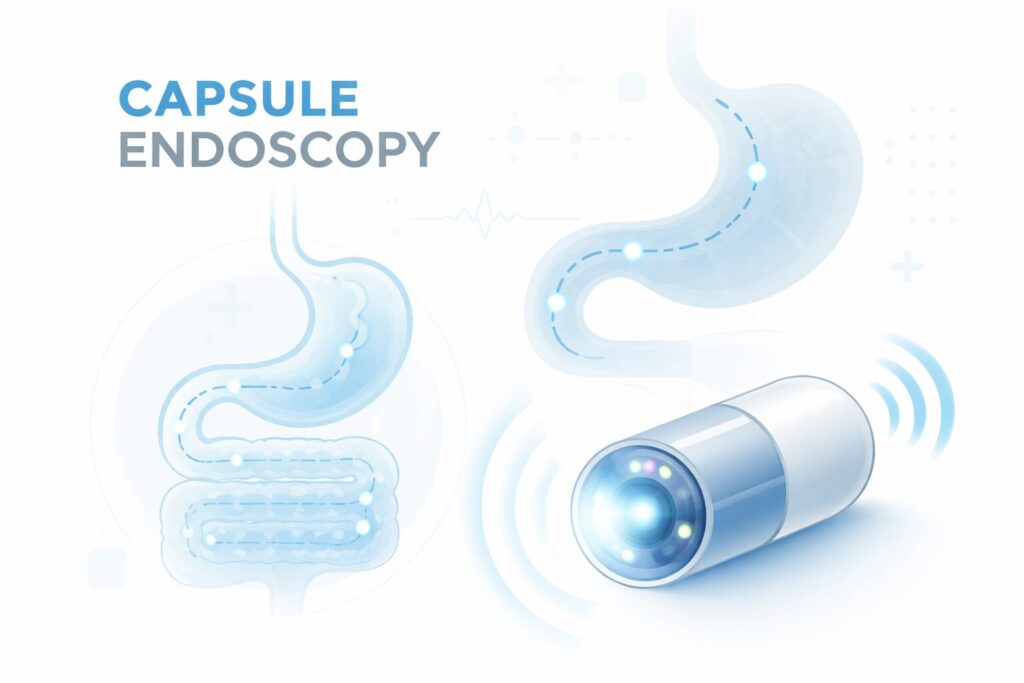
Wireless capsule endoscopy (WCE) has transformed gastroenterology since the early 2000s by enabling noninvasive visualization of the gastrointestinal tract, particularly the small intestine—an area traditionally difficult to examine with conventional endoscopy. Conceptualized in the 1980s by Gavriel Iddan and Eitan Scapa in Israel and advanced in parallel by Paul Swain in the UK, WCE brought Richard Feynman’s idea of “swallowing the surgeon” closer to reality.
The first FDA-approved capsule, PillCam SB1 (2001), demonstrated the feasibility of complete small-bowel imaging and rapidly expanded clinical use beyond obscure GI bleeding to include Crohn’s disease, celiac disease, small-bowel tumors, and iron deficiency anemia. Subsequent innovations led to colon capsule endoscopy and pan-enteric capsules, broadening diagnostic applications and raising interest in colorectal cancer screening.
Recent integration of artificial intelligence has significantly improved diagnostic accuracy and reduced interpretation time while maintaining high sensitivity. Despite ongoing challenges—such as incomplete exams, capsule retention, and lack of therapeutic capability—advances in capsule robotics, active locomotion, magnetic control, and real-time lesion detection are positioning WCE to evolve from a purely diagnostic modality into a potential interventional platform. Overall, capsule endoscopy remains a critical and rapidly advancing tool in GI diagnostics and future therapeutics.